Plenty of L&D leaders have made up their minds about AI agents before the first sales call on the subject. An agent, the thinking goes, is the chatbot from three years ago with a fresh label. Back then the intranet was supposed to answer every question too. Today the bot still knows the same twelve answers it knew on day one, and people ring the specialist team directly again.
That scepticism is well earned. It still aims at the wrong thing, and that matters for any plan built on it: if you treat agents as better chatbots, you judge them by the quality of their answers. The real difference lies elsewhere.
Omnora’s white paper on AI agents in corporate learning sets out that difference, with use cases and the conditions that make such projects work or fail. The paper is a free download; what follows takes up its central point.
Why the suspicion is fair
“Agent” is this year’s label, and labels are free. Some of what is sold under that name today is a chatbot, plain and simple: a language model sitting in front of a document collection, taking a question, phrasing an answer and then standing still. Anyone who has watched such products in a demo feels vindicated, and rightly so. Then there is the history. The classic bots of recent years followed fixed decision paths along the lines of “if question X, then answer Y”, forgot after every session who they had been talking to, and had no source beyond a glossary or an FAQ list. When an L&D team waves away each new term after that experience, it has little to do with a dislike of technology. It is memory.
We think that reflex is healthy. It protects you from pilots that leave behind one more window on the intranet and nothing else.
A chatbot replies, an agent gets on with it
Asking “how good is the answer?” sends you the wrong way with agents. A more useful question: what happens once the answer has been given?
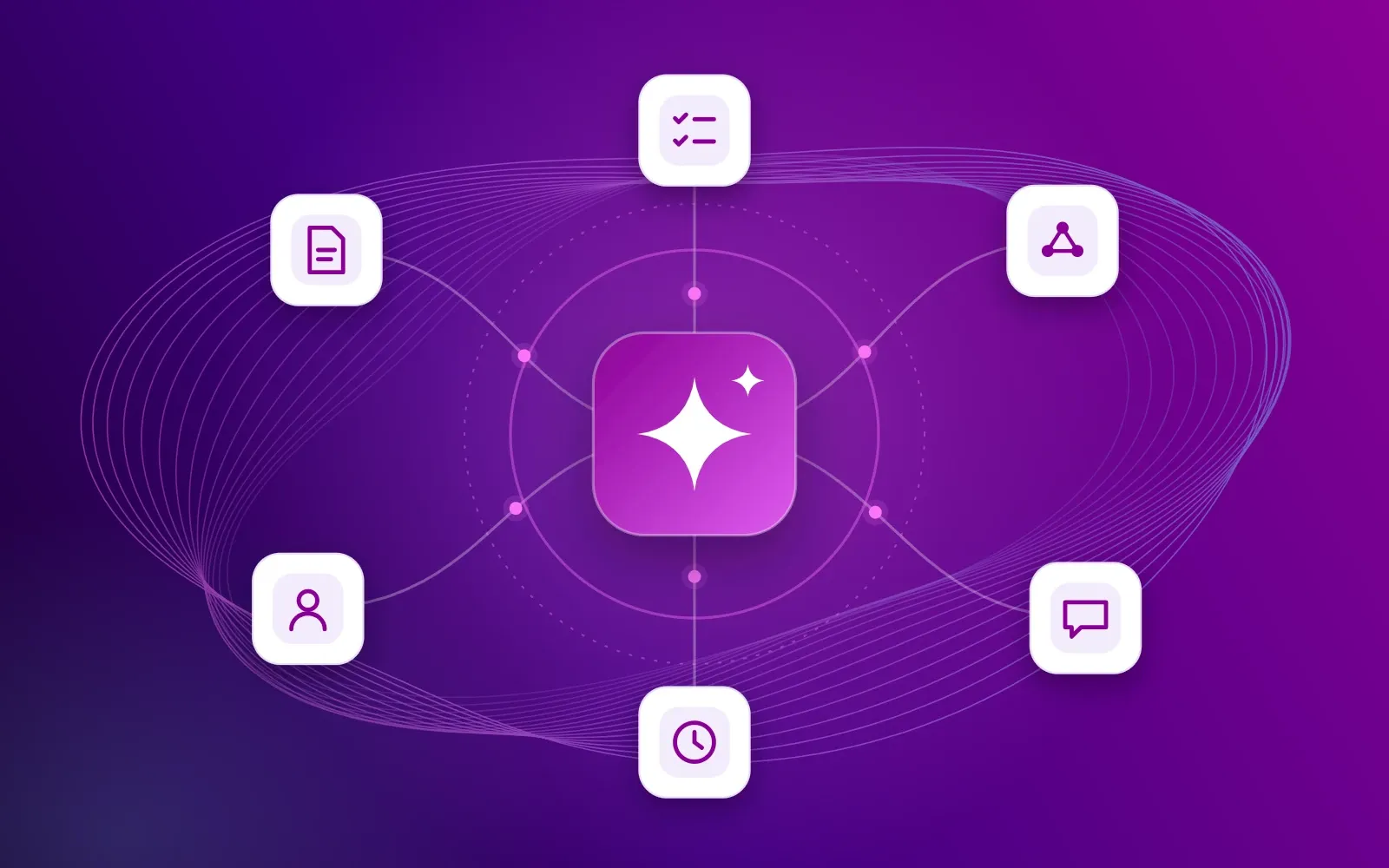
With a chatbot, nothing. The exchange ends or is handed to a person. An agent, by contrast, is given a goal and works through it. Four traits tell you whether a product has earned the name:
- It takes a brief rather than a question, breaks it into steps, decides the order and triggers actions itself.
- It remembers role, history and project status beyond a single session.
- It reads and writes where the work happens: calendar, email, knowledge sources, LMS.
- It recognises when a case belongs with a person and passes it on.
Customer support already shows this. Where a bot used to match incoming questions against a prepared list, an agent classifies the request, looks through older tickets, finds the cause and proposes a fix. That has little in common with a tool you operate. It is closer to a colleague you hand a task to, who gets back to you when stuck.
What this looks like in corporate learning
The difference is clearest where L&D loses the most time: gathering knowledge that lives in people’s heads. Without an agent, that means finding dates, holding briefing calls, running interviews, taking notes, chasing follow-up questions by email and producing a rough draft that someone eventually turns into a training format. Hardly any of these steps is demanding. Nearly all of them cost days.
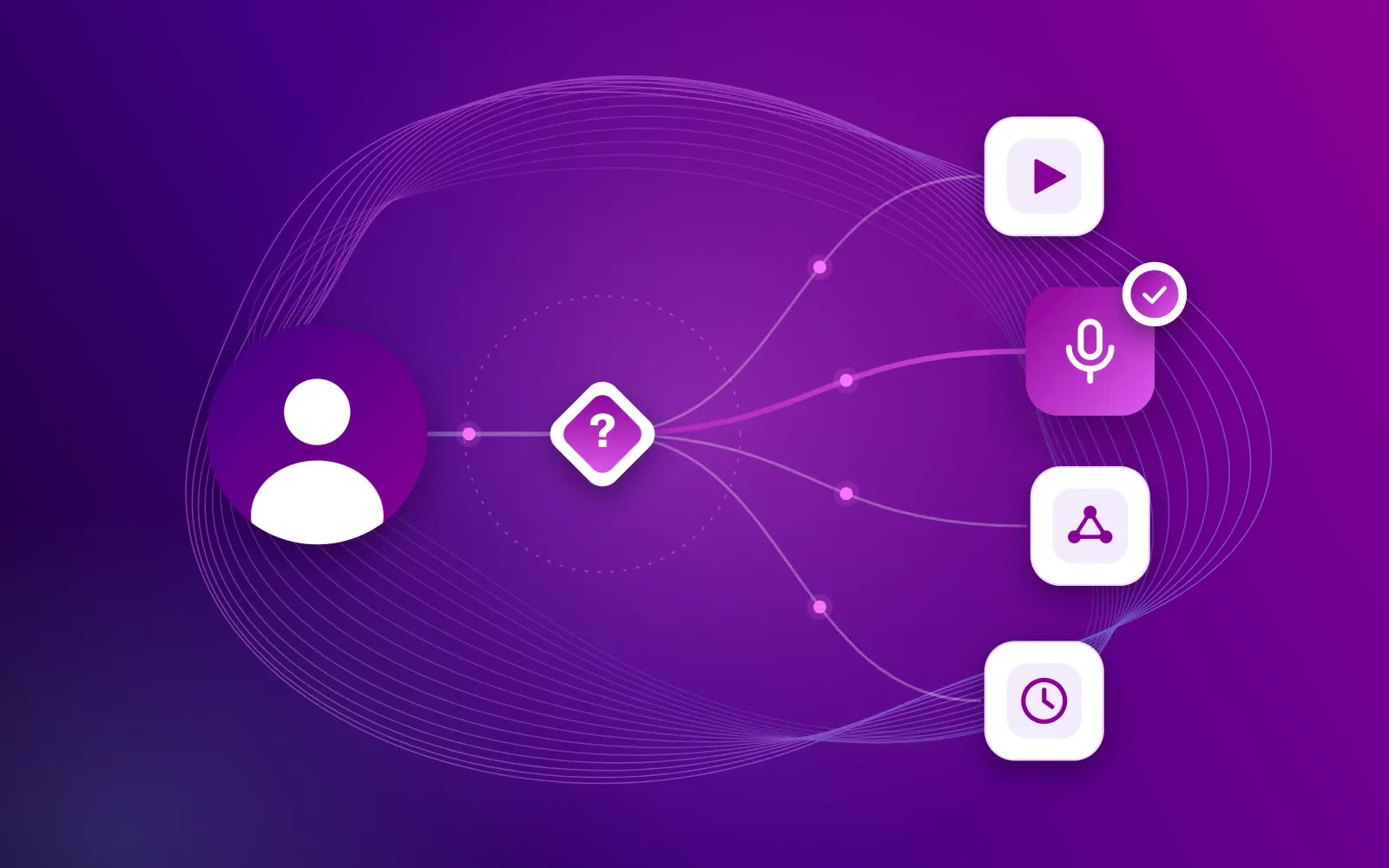
In an interview-to-training workflow of the kind Omnora runs, the agent takes over that chain. The L&D team gives it a brief and background material on the topic. From that it drafts a questionnaire, which the team can review and change before anything starts. It then invites the chosen experts by email, conducts the interview as an audio conversation, probes where an answer stays thin and turns the result into a document or a training video. Several agents can do this in parallel. For the person being interviewed, it comes to 30 minutes of expert time per AI interview.
What you get at the end is a training draft, not a chat log.
The same pattern carries other tasks. Learning paths for new joiners, shaped around their role and tools. Modules built from conversations with experts who are about to leave. Rolling out a new policy with a quiz and documentation. Or lessons learned, written down at the close of a project instead of fading out in the wrap-up meeting.
What is left for the L&D team
Drop the first belief and people often land on a second: if agents do all that, why keep an L&D team? That worry deserves a serious answer as well.
History helps here. Corporate learning has moved from content made by professional trainers, through employee-generated content, to AI-generated content, and no stage pushed out the one before. Agents add another layer. What shifts is the team’s own work. It comes down to three decisions an agent cannot sensibly make for itself:
- Which knowledge needs securing and teaching, and in what order.
- Who holds it. The choice of experts shapes the result more than any questionnaire.
- What gets signed off. Subject review and the final polish stay with people.
Why that shift is likely to define the next few years in L&D is covered in our outlook on corporate learning in 2027.
How far this goes is still open. The white paper describes a next stage in which agents carry the whole learning process, from needs analysis to delivery. Whether that will work at scale, and when, nobody can say with confidence today, ourselves included. The human checkpoints at the questionnaire and at sign-off are deliberate for that reason, not a stopgap.
Where agents in L&D fall down
Rarely on the model. An agent works with what it finds. If course material, process descriptions and role profiles are out of date or scattered, it automates the mess, only faster. What context an agent needs to work reliably is the subject of our piece on agent enablement. Once conversations with employees are recorded, GDPR, works agreements where they exist and security standards also come into play, and it pays to check vendors closely on all three. And you need people in-house who can steer agents. That is where the gap is wide: according to Masterplan / Amadeus Fire (2025), 55 percent of companies in Germany, Austria and Switzerland call AI a top topic, yet only 35 percent offer training on it. Organisations elsewhere in Europe will recognise the pattern. Article 4 of the EU AI Act, on AI literacy, has applied since February 2025. How your organisation covers it today is a good first question for your own legal team.
That leaves the question of building agents yourself. Plenty of platforms offer it. It takes a concept, a data structure and someone to maintain both for the long haul. The questions that arise when you run your own build day to day are laid out in Claude or a training platform.
Next time the word agent turns up in a vendor presentation, ask which steps happen afterwards without your team. Then ask which ones your team wants to keep on purpose. No vendor can answer the second question. That one is yours.
Download the free white paper “AI agents in corporate learning”