Anyone setting out to capture tacit knowledge tends to start by asking which method to use. Interview or workshop, video or handbook? That question comes one step too early. Which method works depends on where the knowledge lives. And that varies from role to role.
A word on terminology first. We prefer to call it expertise built from experience. “Tacit” only says that something has not been written down; “experience” says where it comes from, namely cases someone has lived through. That sounds like hair-splitting, but it is the key to everything that follows, because those cases are exactly how you get at the knowledge.
The philosopher Michael Polanyi put the core problem into one sentence back in 1966: we know more than we can tell. The line is often quoted as an excuse, as if it proved that capture is hopeless. Polanyi meant it as a description. Some of what experts would never volunteer can be drawn out with the right question. Some cannot. Telling the two apart saves a great deal of wasted effort.
Four questions before you pick a method
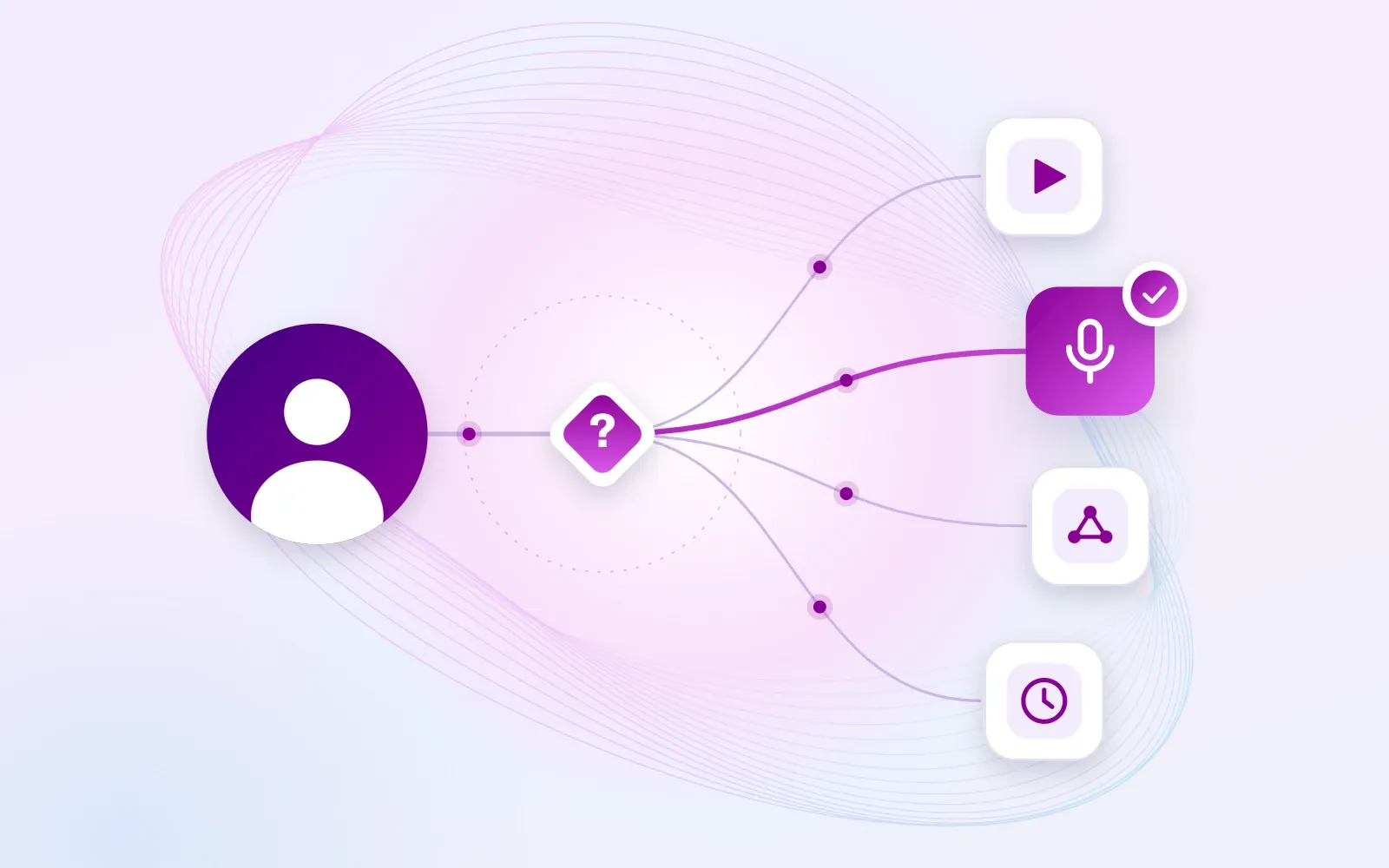
Work through these questions in order for a role or a topic. The first one you answer with yes takes you to the right section.
- Does the knowledge sit in hand skills, in the ear, in a feel for a machine? Then read on under hands.
- Does it sit in decisions, in when someone deviates, escalates or refuses? Then under exceptions.
- Do several people know the same thing, but each in their own way? Then under reconciliation.
- Is a departure already fixed, with only weeks left? Then go to sequencing first; the method comes after.
In knowledge capture projects, most roles end up at question two. That is an experience value, not a promise. How much remains unsecured overall is shown by a different figure: 42 percent of job-related knowledge exists only in individual heads and is documented nowhere (Panopto/McKinsey).
When the knowledge sits in the hands
The welder hears from the sound that the seam will not hold. The maintenance technician feels through his glove that a bearing is running hot. Ask either of them what exactly they are doing and you get an honest answer: you just notice.
No interview helps here. Not an AI interview either, and we say so plainly even though it concerns our own tool. What works instead is observation: a second person shadows a full shift, films the decisive moments and asks the expert to think aloud while working, saying what they are paying attention to and why they pause. The feel itself does not end up on paper that way, but the signals it responds to do: the sound, the discolouration, the resistance on the tool. A successor can then practise deliberately instead of waiting years for those signals to register on their own.
Guided practice does the rest. Uncomfortable, but true.
When it sits in exceptions and decisions
This is where most of what organisations miss after a key person leaves is found. The standard procedure is in the SOP. What is missing are the criteria by which someone departs from it.
The most reliable method for this is an old one. John C. Flanagan described it in 1954 as the Critical Incident Technique, and its core is a small shift: you do not ask about rules, you ask about cases. “How do you handle complaints?” produces a summary of the handbook. “Tell me about the last complaint where you decided differently from usual” produces what the handbook lacks: how the person noticed, what they weighed up, whom they turned to for advice.
What matters next is probing. The first answer is almost always too smooth. Only at the second or third “How exactly did you recognise that?” do the threshold, the rule of thumb and the colleague’s name at the other plant come out. That persistence is missing from many conversations between colleagues, because the person asking does not know the subject well enough to notice where an answer dodges.
An AI-led interview takes on this role. It probes as soon as an answer stays vague and takes around 30 minutes of the expert’s time per session. In Omnora Intelligence Management the result becomes a knowledge item that a named owner approves and that carries an expiry date. How such a conversation runs is set out in the article on AI expert interviews.
When several heads hold different versions
Two shift leads, two thresholds. Both are certain they are right. Both have done it their way for years.
The obvious reflex is a workshop: everyone round one table, the result on a flip chart. The reflex has good reasons behind it. A workshop is quick to organise, it feels participatory, and for a first overview it genuinely works. For the detail it is risky. In a group the most senior or the loudest voice tends to prevail, and whoever works differently would rather stay quiet than admit in front of colleagues that they have been departing from the official rule for years.
The reverse order is more reliable:
- First interview each person individually, using the same case questions.
- Then settle together only the points where accounts diverge, and have a named owner decide the valid version.
Two habits become one rule, and the deviation is on record instead of hushed up. The opposite situation, where only a single person knows, is covered in the article on single points of knowledge.
When time is short
A resignation changes the question. Which method would be best matters less than what comes first.
The rule is short: rare and consequential before frequent and harmless. Everyday work teaches any successor the frequent tasks, slowly but reliably. The incident that happens once a year and then gets expensive stays a blind spot unless someone has captured it beforehand. For the weeks between notice and the last working day there is a dedicated guide in the article on knowledge transfer in offboarding.
A start does not need a project. Tomorrow, ask an experienced person on your team when they last deliberately did something differently from what the process says.
If the answer takes longer than one sentence, you know which section of this article you are in.