
 de
Coordination gets cheap.Judgement gets expensive.
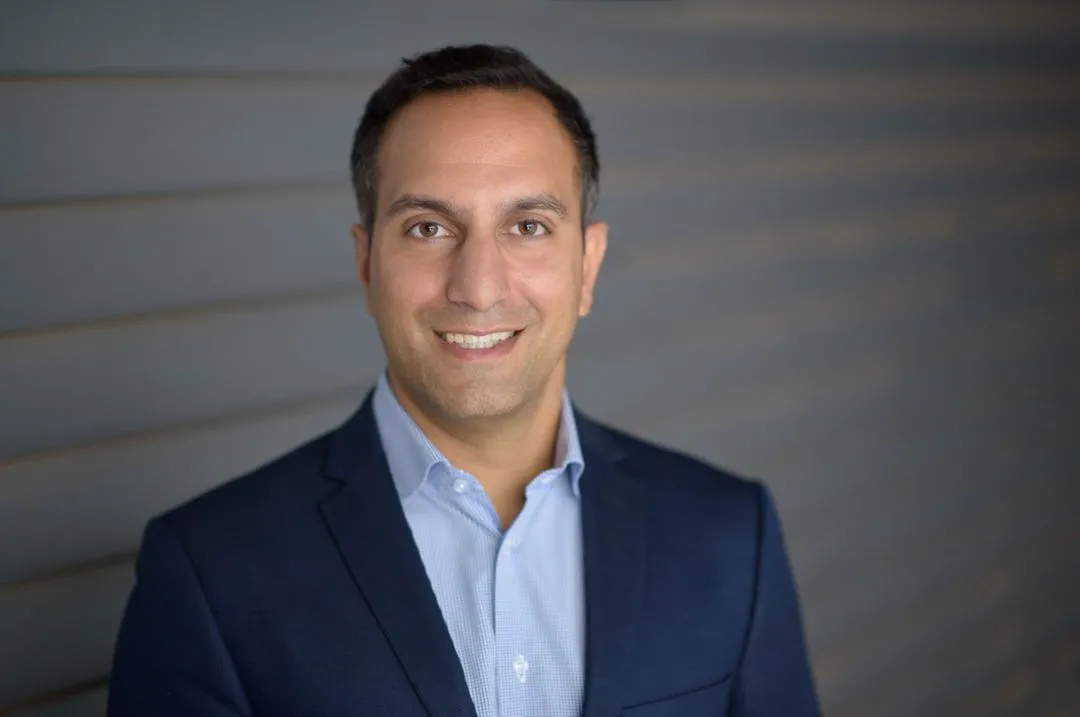
Sebastian Walker, CEO and founder of Omnora, talks about why organisations are getting flatter and who inside them can still tell whether a result actually holds. Backed by current studies, without the hype.
- English and German
- On site and remote
- Keynote, fireside, panel, workshop
Featured in
- Handelsblatt
- Frankfurter Allgemeine Zeitung
- WirtschaftsWoche
- Haufe
- Mannheimer Morgen
The starting point.
Three numbers from current studies, each with its limitations.
- 95%
- of GenAI pilots with no measurable bottom-line effect
- The models did not fail. The organisations around them did.
- MIT Project NANDA · preliminary, not peer-reviewed
- 8.7×
- more often a changed way of working under active leadership
- when managers actively back AI. In Germany, 21% experience that.
- Gallup · US survey and German Engagement Index
- 19%
- longer experienced developers took with AI
- while believing they were 20% faster. They discarded more than half the output.
- METR · randomised trial, snapshot of 2025
Five topics, one shared question.
All five start from the same distinction: coordination can be replaced, judgement cannot. Each topic works as a keynote, panel, guest article or podcast.
95%
of GenAI pilots without measurable effect · MIT
Why AI scaling fails without organisational intelligence
AI initiatives fail on missing organisational context, not on the model. The talk shows how to tell that your knowledge foundation will not hold, and what role the leadership layer plays in that.
Best for: AI and digital conferences, strategy days, CDO forums
What the audience takes away
- Why most pilots fail on the organisation rather than the technology
- Three questions to test your own knowledge foundation
- The difference between the documented ideal case and the lived exception
Format: 20 to 45 min keynote, live demo optional. English or German
Enquire30%
of the workforce retires by 2036 · Destatis
Retired boomers: when experience leaves the building
Demographics as an operational risk. How organisations identify critical roles and secure experience before the calendar decides. And why the layer where judgement forms is disappearing at the same time.
Best for: HR and people conferences, CHRO formats, leadership summits
What the audience takes away
- Which roles tip first and how to spot them
- Why documentation shows the ideal case while reality is made of exceptions
- What a knowledge transfer must deliver to avoid ending up in a folder
Format: 30 to 45 min keynote, workshop optional. English or German
Enquire8.7×
greater impact under active leadership · Gallup
Technology is not the bottleneck, the layer below is
Middle management decides whether an AI rollout reaches the wider organisation. In German companies roughly one fifth of employees experience active support from their own manager. The talk explains why this is not a question of attitude.
Best for: Business summits, C-level forums, congress main stages
What the audience takes away
- Why the effect is multiplicative rather than additive
- Why cutting layers is not the same as redesigning them
- A metric that changes behaviour faster than training does
Format: 20 to 40 min keynote, fireside optional. English or German
Enquire19%
employment gap for 22 to 25-year-olds · Stanford
NewThe severed supply line
The market is looking for juniors with senior judgement, while having stopped training them. You cannot buy judgement when nobody provides the years in which it forms.
Best for: HR congresses, education formats, business press
What the audience takes away
- Where the supply path is cut, at the bottom and in the middle
- Why the numbers are early indicators and not causal proof
- How to rebuild entry roles around evaluation instead of support work
Format: 20 to 30 min, also as a panel. English or German
Enquire56%
of AI output discarded by experienced developers · METR
NewWhen throughput rises and review disappears
A person’s error rate does not change with AI, their throughput does. Approving fifty drafts a day without being able to judge one means making fifty decisions you never actually made.
Best for: Board retreats, risk and compliance formats, roundtables
What the audience takes away
- Why slowness also worked as a safety mechanism
- The list that exists in no org chart and takes two weeks to build
- Why the rejection rate says more than the adoption rate
Format: 20 to 40 min, also as a fireside. English or German
Enquire
What the audience leaves with.
- 01
A distinction
Coordination and judgement were never paid for separately. Now they have to be thought about separately.
- 02
A question for your own company
Where does a sign-off currently sit with someone who cannot judge the content?
- 03
A metric
Rejection rate instead of adoption rate. Measurable from next week, without budget.
Formats that fit the occasion.
Every keynote is tailored to the occasion, the audience and the intended effect. A prep call is always part of it.
Keynote
20 to 45 minutes, with a live demo if you like.
Fireside
A moderated conversation with room for audience questions.
Panel
A clear position in the discussion, well prepared.
Workshop
Going deeper with leaders, following the keynote.
Also as a guest article, feature or podcast conversation. English and German, on site and remote.
Talks and coverage.
Recent talks, trade articles and podcast conversations. Most coverage is in German.
- 08/2026SAATKORN · WorkTech Talk · in GermanHow does knowledge management with AI actually work?
- 07/2026Handelsblatt · Master ClassWork in Progress, Düsseldorf
- 06/2026Accelerate Tomorrow · Future StageAI Summit, Berlin
- 10/2025WirtschaftsWoche · Feature · in GermanHow AI could preserve the knowledge of the boomer generation
- 10/2025Klartext HR · Podcast · in GermanRethinking knowledge management
- 10/2025New Work Chat · Podcast · in GermanThe intelligent organisation. Capturing knowledge with AI.
- 09/2025Haufe · Personalszene · in GermanHR Innovation Award winners and the German Mittelstand
- 07/2025Handelsblatt · Master ClassWork in Progress, Düsseldorf
- 06/2025Handelsblatt · So klingt Wirtschaft · in GermanWhen experts leave: how companies rescue hidden know-how
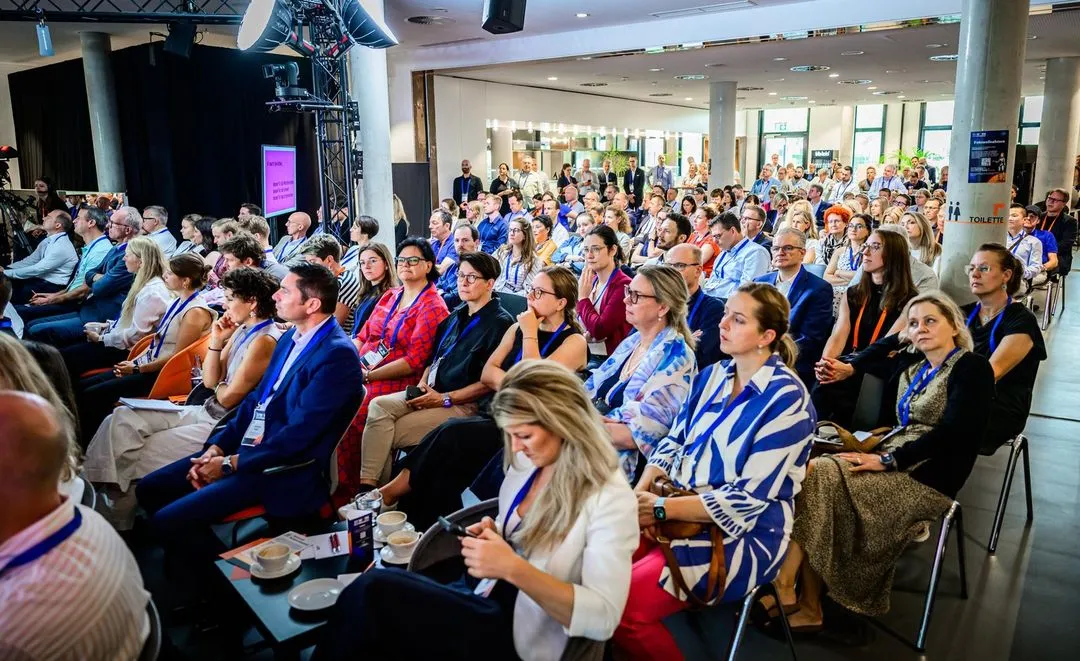
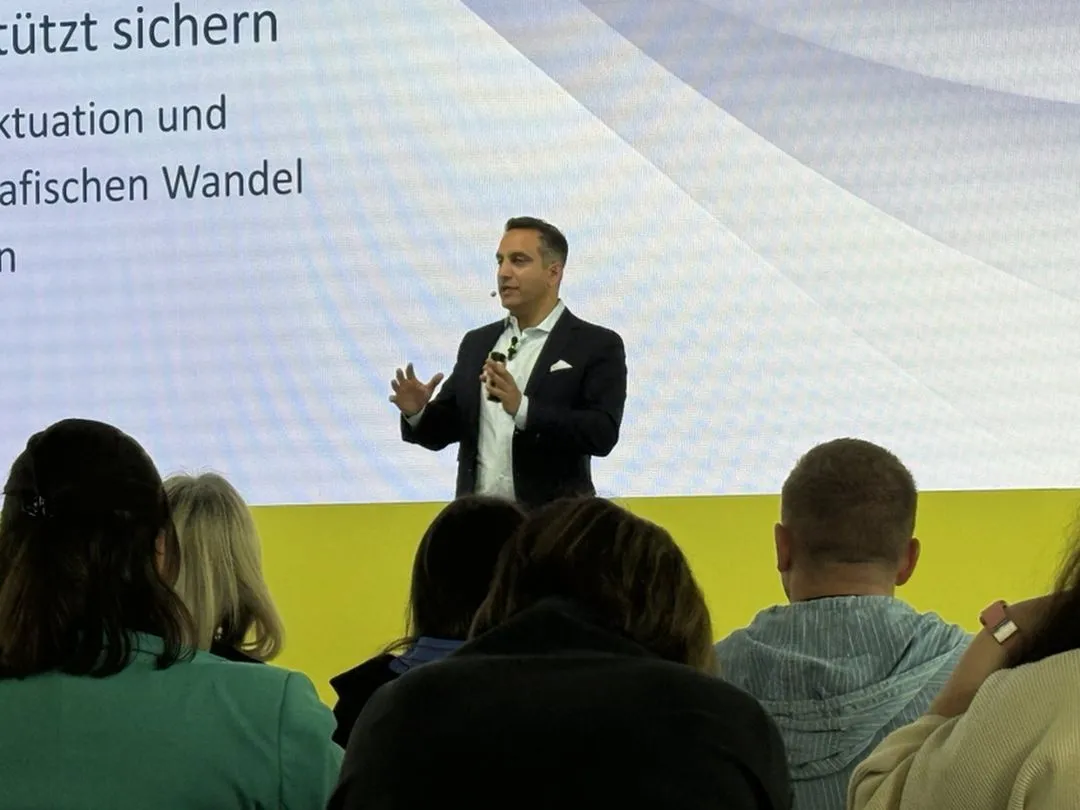
“We have twelve pilots running and none of them at scale. After the talk it was clear we had been asking the wrong question. It was never about the model.”
Further stages on request. Full overview in the press area. Go to press area
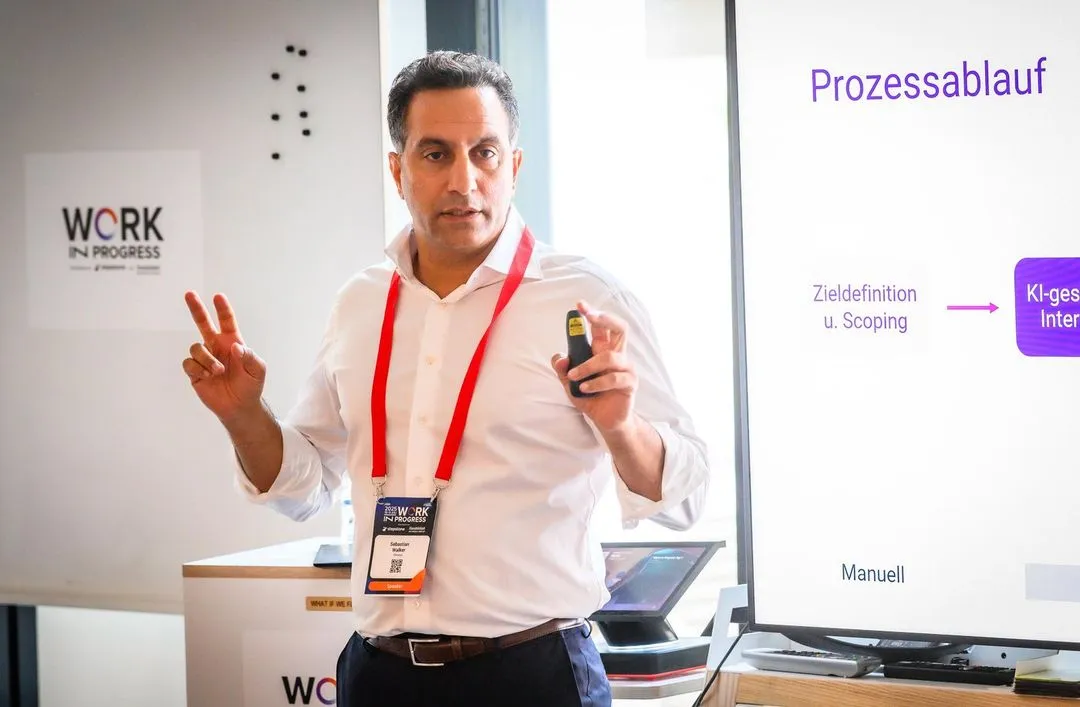
About Sebastian.
For more than 15 years Sebastian Walker has worked on one of the most critical resources in any company: the knowledge held by its people and experts.
As founder and CEO of Omnora he works on making internal know-how systematically accessible: across teams, at scale and machine-readable. Not as an archive, but as a basis for decisions, for people and for AI systems.
On stage and in podcasts he is a sparring partner for decision-makers who value plain speaking. His contributions are practical and come without promises of salvation.
What he stands for
- AI readiness through structured knowledge transfer
- Productivity instead of tool overload
- Resilient organisations through secured expert knowledge
- A clear position against AI hype without substance
“Plenty of companies invest in AI, but almost none make sure the systems are working with the right knowledge.”
Request a talk.
Every keynote is tailored to the occasion, the audience and the intended effect. Also available as a guest article, feature or podcast conversation. A prep call is always part of it.