Talk about knowledge retention and AI in a company for five minutes and you run into terms that everyone at the table understands slightly differently. Is experiential knowledge the same as tacit knowledge? Is intelligence management just a new label for knowledge management? And what separates RAG from MCP? The ten terms below come up in almost every project. They are grouped by the question they answer.
Which knowledge are we talking about?
Tacit knowledge
Tacit knowledge is what people know and use without putting it into words. It lives in practiced movements, in a feel for a machine, and in decisions someone makes because they have seen similar cases many times. Michael Polanyi summed it up in 1966: we know more than we can tell.
It is missing from documents because it feels obvious to the person who has it. A welder hears that a seam will not hold before any test shows it. Part of it can be put into words by asking the right questions; another part can only be passed on by showing and practicing. The article Capture tacit knowledge shows how to approach it.
Experiential knowledge
Experiential knowledge is the part of tacit knowledge that comes from cases someone has lived through: how to tell that an order will cause trouble, when to deviate from the rule, and whom to ask when in doubt. A shift supervisor knows the line has to run slower with a certain batch of raw material, even though the spec says otherwise.
The distinction matters in practice. Unlike pure intuition, experiential knowledge can usually be captured if you ask about concrete cases instead of general rules. That is exactly where AI-supported interviews come in.
How do you handle it?
Knowledge retention
Knowledge retention is the systematic capture of experiential knowledge before it leaves the company: through retirement, resignation, a role change or a reorganization.
The pressure is demographic. Almost 30 percent of people employed in Germany will reach retirement age by 2036 (Destatis). And 72 percent of companies depend on at least one person whose departure would noticeably affect operations (SHRM, 2023). Starting at the farewell gets you mood in the exit interview, but little substance. Structured interviews that ask specifically about decision logic, exceptions and warning signs work far better.
Knowledge transfer
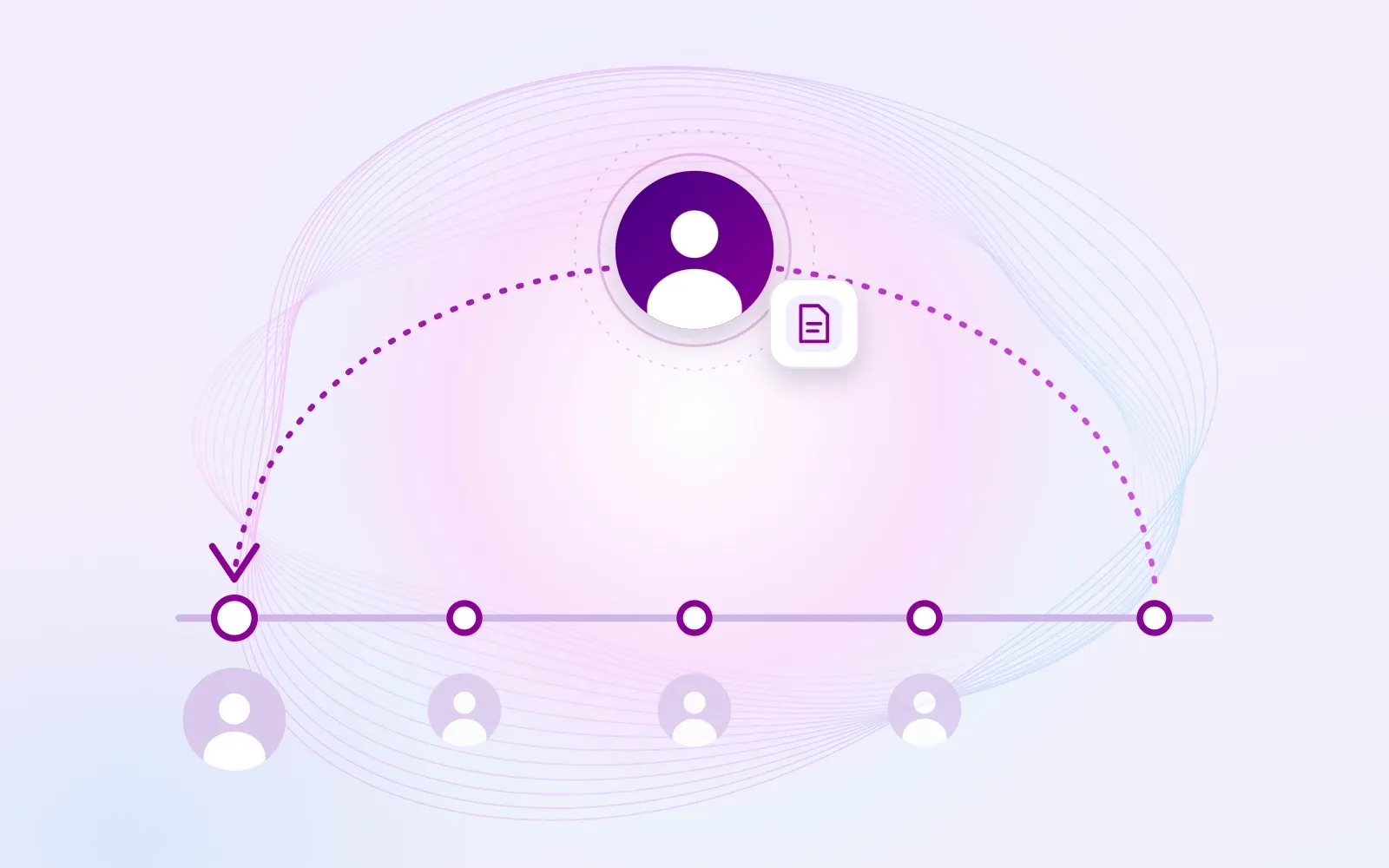
Knowledge transfer is the passing on of knowledge between people, roles or teams, usually from experienced colleagues to a successor or new team members.
The personal route of onboarding, mentoring and handover meetings works, but it does not scale. It fails when time runs short or the person has already left. Former experts then often come back as consultants, at two to three times their former day rate (HBR). Systematic knowledge transfer separates the knowledge from the person: captured once, then delivered as a handover document, knowledge article, training or AI context. The article Knowledge transfer in offboarding describes this in practice.
Intelligence management
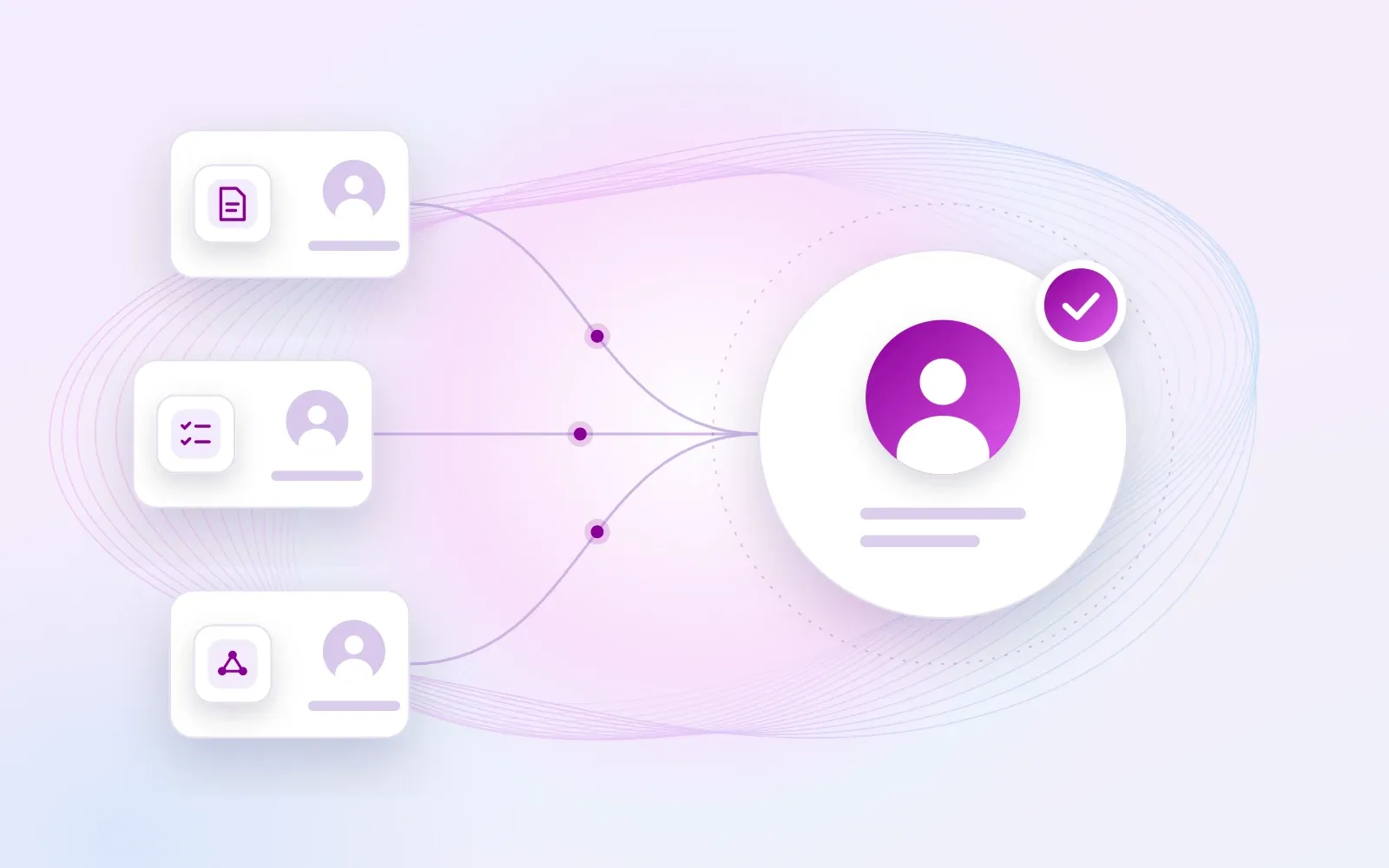
Intelligence management is the discipline of systematically capturing experiential knowledge, validating it and making it available where decisions are made, for people and for AI systems.
It typically runs in four phases:
- Identify: Where does critical knowledge sit, and which of it is at risk?
- Capture: Recording it, for example through an AI expert interview.
- Consolidate: Structuring, resolving contradictions, approving.
- Enable: Delivering it as a knowledge article, training or context for AI agents.
The result is not an archive but a validated body of knowledge with an owner, a validity date and a source. Without that foundation, AI scales errors instead of expertise.
Knowledge management vs. intelligence management
The two terms are often used interchangeably, but they mean different things. Knowledge management organizes what is already documented: file shares, wikis, intranet, search. Its limit: around 42 percent of job-related knowledge is documented nowhere (Panopto/McKinsey) and stays invisible to even the best wiki. On top of that, content goes stale without active upkeep.
Intelligence management starts with the undocumented knowledge, captures it actively and validates it before anyone relies on it.
In short: knowledge management makes documents findable. Intelligence management makes experience usable.
How does the knowledge reach AI systems?
RAG (Retrieval-Augmented Generation)
RAG is a method in which a language model receives relevant content from a knowledge base before it answers. Instead of guessing from its training, it answers based on concrete sources.
The benefit depends entirely on the knowledge base. A 2024 meta-analysis shows that RAG with validated context reduces hallucinations by 40 to 71 percent. The reverse is also true: if the base holds outdated or contradictory documents, RAG returns exactly those errors, just more fluently phrased. That is why Omnora Intelligence Management provides the validated knowledge base through its own RAG API.
MCP (Model Context Protocol)
The Model Context Protocol is an open standard for how AI assistants and agents access external data sources and tools. An MCP server provides content or functions, and any MCP-capable system can use them, regardless of the model vendor.
For company knowledge this means the knowledge base is connected once as an MCP server, instead of building a separate integration for every copilot and chatbot. The quality question is the same as with RAG. An agent that reads outdated files through MCP acts on an outdated basis.
How does it become training?
SCORM and xAPI
SCORM and xAPI are the two standards through which learning content talks to learning management systems.
- SCORM is the established route: a course is exported as a package, imported into the LMS and reports completion and score back. Virtually every LMS supports it, which makes SCORM the basis for mandatory training with proof of completion.
- xAPI is more flexible and also records learning events outside the LMS, such as “watched video” or “passed quiz”.
The practical hurdle with SCORM: every content change means a new export and a new import. Omnora Authoring Automation solves this with remote updates, so the package in the LMS updates itself without a re-import. More in the article SCORM explained.
Employee-generated content (EGC)
Employee-generated content is learning and knowledge content that employees in the business units create themselves, instead of a central team or agency producing every minute of training.
It works because the knowledge sits in the business units, not in L&D. When experts can produce directly, the most expensive loop in training production disappears: the briefing between subject matter experts and production. L&D steers quality, governance and rollout while creation is spread across the organization. At DPD, around 240 active authors have created more than 1,800 videos this way in two and a half years.
How the terms fit together
The ten terms describe a chain. It starts with tacit knowledge and, within it, the experiential knowledge that no document contains. Knowledge retention and knowledge transfer make sure it does not leave with the person. Intelligence management turns it into a validated body of knowledge. RAG and MCP bring that knowledge to AI systems; SCORM, xAPI and employee-generated content bring it to the people who learn.
Cut corners at any point in the chain and you notice it at the end. A chatbot is only as reliable as the knowledge it draws on, and a training course only as good as the experience inside it.