Expert generated content sounds simple in theory: the experts know what needs teaching, so they create the training themselves. In practice an introduction runs in phases, and the hardest one does not come at the start.
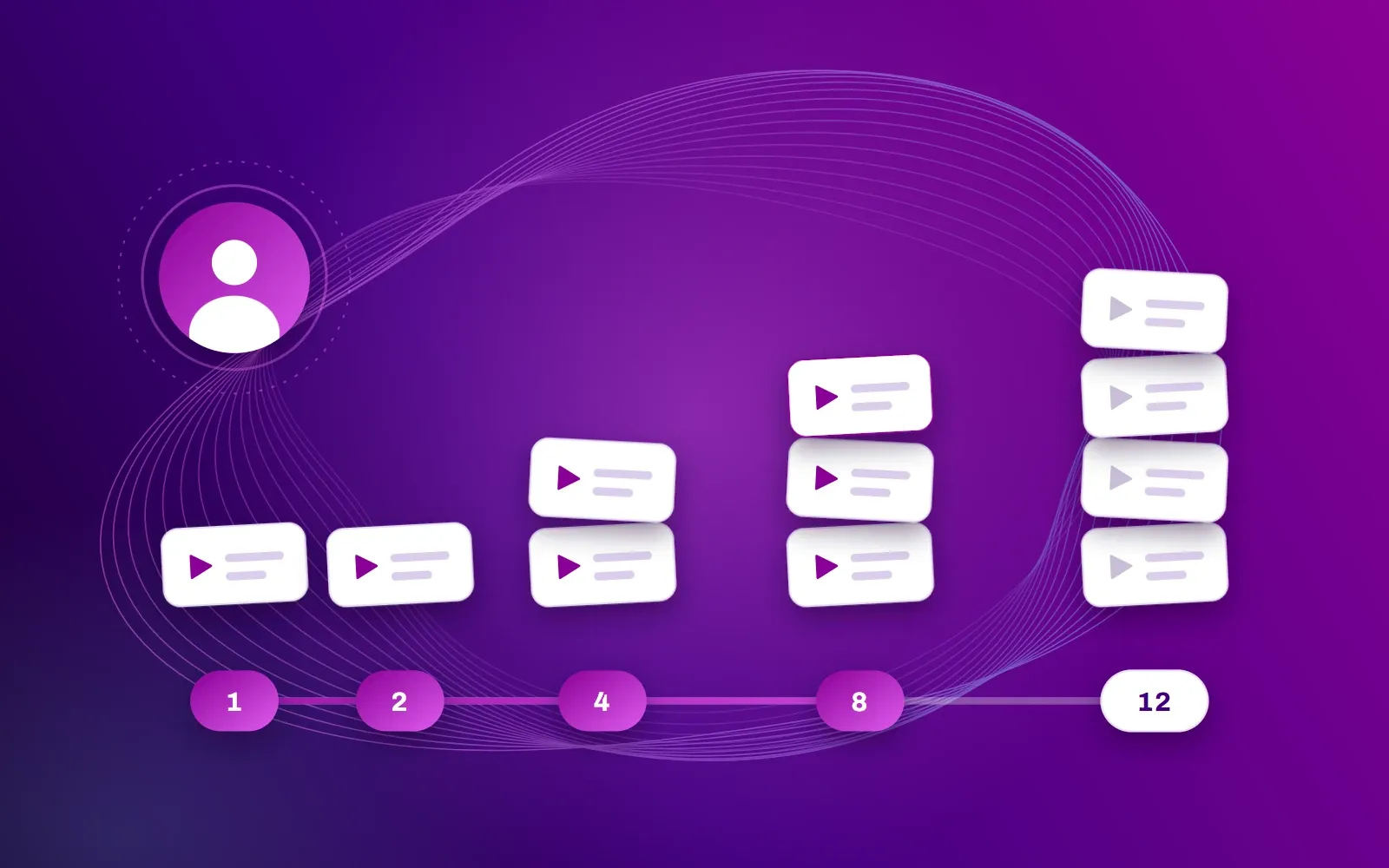
Week one: enthusiasm and a tool
Two or three business units with urgent needs go first. Typically these are teams that have waited months for a training because L&D is at capacity. Traditionally one learning hour costs 100 to 200 hours of development work (iSpring/Chapman); the queue is long accordingly.
In the first week what matters most is a tool that can be used without training. Anyone who first has to attend a course on the authoring tool loses the experts before they have built their first module. With Omnora a first training is built from existing documents or a short interview; compared with traditional production that typically takes up to 80 percent less time per training hour. How this works in detail is described in the article on learning videos with AI.
Week two: the first sign-off
Now it shows whether the rules are clear. Who approves? How long may a module be? May a business unit publish a training directly?
A simple rule has proven itself: one subject review and one instructional review, both within a few days. L&D supplies templates that set length and structure. With that, L&D’s role shifts noticeably, from the workbench to quality assurance.
Week four: the sticky phase
This is where most programmes stall. The initial momentum is spent, day-to-day work catches up with the experts, and the benefit is not yet visible because the first trainings have only just gone live.
Honestly, there is no trick for this. What helps is visibility: show business units who used their training and which questions no longer come up. And reduce the effort further. Experts who only need to explain things in a half-hour conversation, rather than build modules themselves, are more likely to stay involved; how such conversations run is covered in the article on AI expert interviews.
Week eight: the first followers
Once the pioneers show results, the next business units come forward on their own. This is the moment to open the programme, but in a controlled way: with the same templates and the same sign-off. Loosen the rules now to grow faster and you end up with a library nobody trusts.
Week twelve: the question of scale
After about three months it can be judged whether the model holds. That is an experience value, not a promise. How many trainings were created, how many were used, how much time has L&D gained for steering instead of production? How to extend the approach without extra headcount is shown in the article on scaling training production.
Not every business unit will stay.
That is selection, not failure: the units that stay are the ones whose knowledge is needed most urgently.