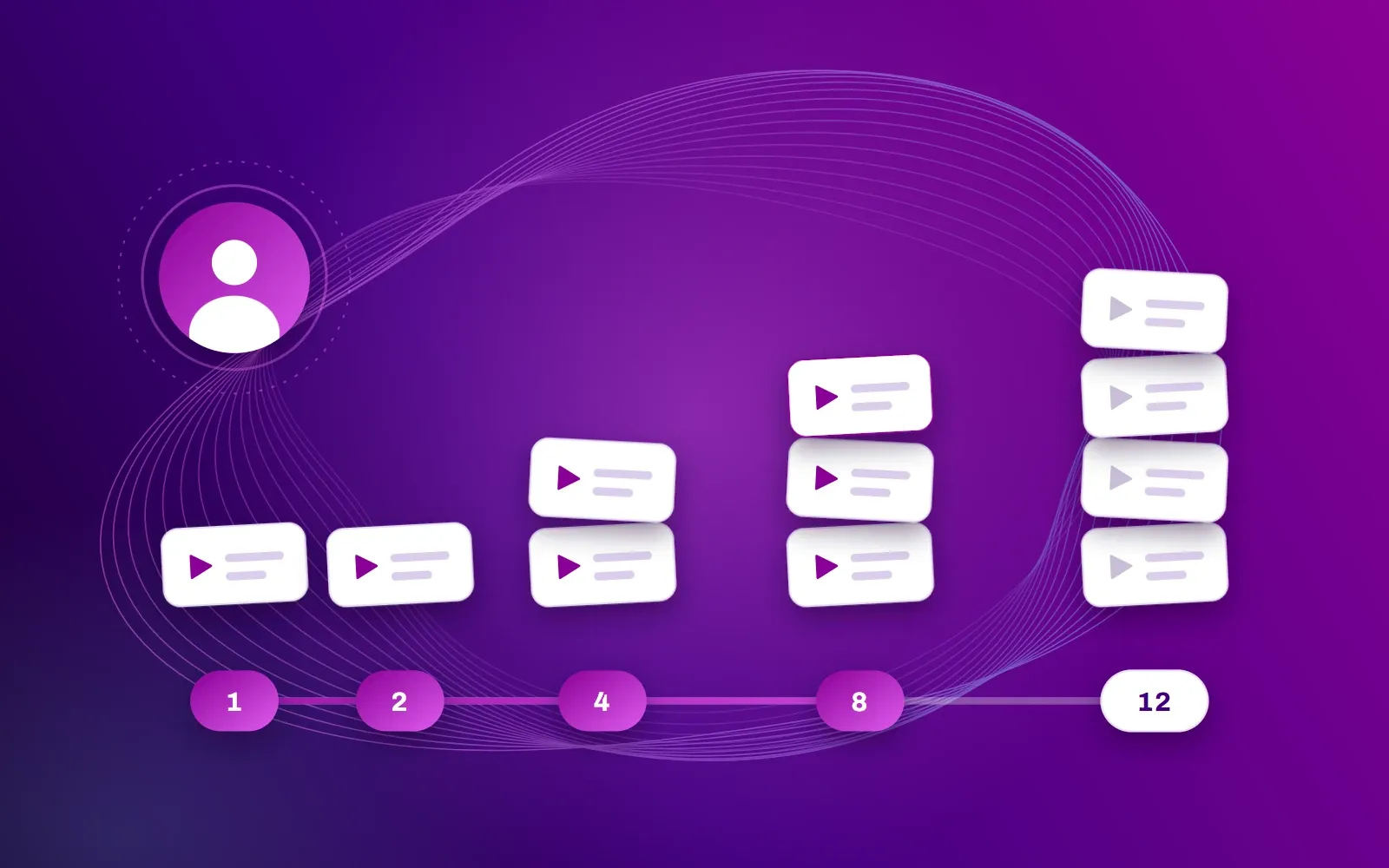
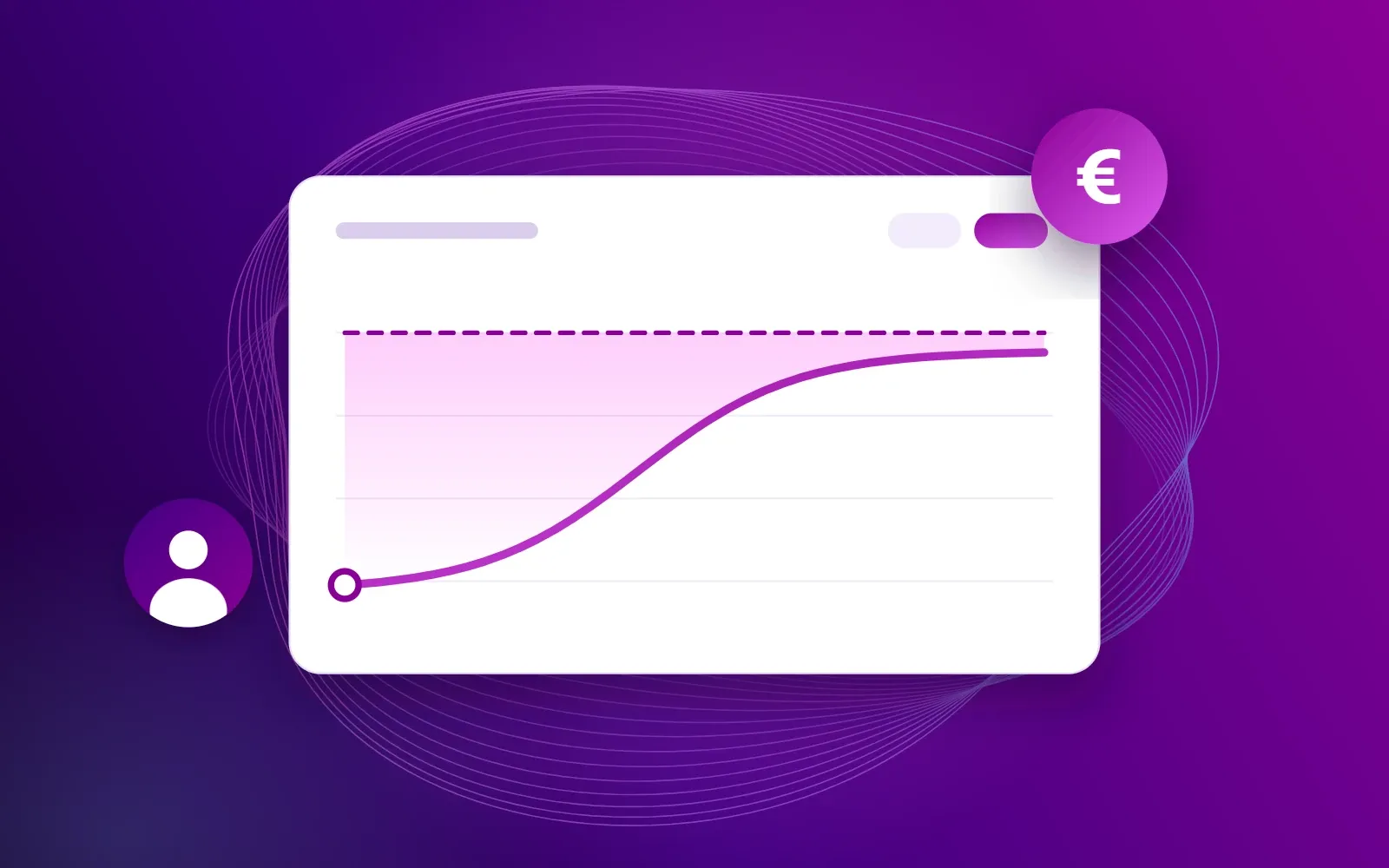
From the first working day, an organisation pays a full salary. Full output comes later. The time in between is called time to productivity, and it appears in hardly any budget, even though every hire incurs it.
What the metric measures, and what it doesn’t
Time to productivity is the span from day one to the point where a new person delivers what their role requires. Sounds clear-cut. In practice even the end point is a matter of definition. In sales it may be the first deal closed independently, in case handling the moment cases go through without queries, in maintenance the first fault someone fixes alone.
We know of no industry figure worth relying on. Values online range from a few weeks to more than a year, almost always without a traceable method. This article therefore gives no average. It works with assumptions you can swap for your own.
A worked example in round numbers
Take a specialist role with €6,000 in monthly employment costs, employer contributions included, and a ramp-up of six months. Assume further that output rises evenly from zero to one hundred percent over that period. Across the six months the person then delivers half of full output on average, and the gap equals three months of cost: about €18,000.
This is a worked example, not a statistic. Nobody starts at exactly zero, and few learning curves are straight. But the order of magnitude holds for many roles, and it grows quickly with the number of hires: twenty new people a year means €360,000 that never shows up as a cost centre.
Costs no onboarding budget lists
The new person’s productivity gap is only the visible part. Three further costs arise, and none is usually tracked:
- Other people’s time. Every question from the new colleague interrupts someone. Across all employees, 5.3 hours a week already go on waiting for information another person holds (Panopto). For new hires the figure is likely higher; nobody has measured it reliably.
- Errors from missing context. Whoever knows the rule but not the exception makes mistakes that someone later has to fix.
- The manager as a permanent help desk. In small teams especially, much of the onboarding lands on the team lead, who gets little else done in that time.
The second item is usually the most expensive, because it only surfaces when a customer complains.
Where onboarding can be accelerated
Onboarding has two parts that can be shortened at different speeds. The first can be standardised: systems, procedures, safety rules, who is responsible for what. Short training helps here, available before day one or in the first week, instead of someone repeating it verbally five times a year. How the first ninety days run with such videos is described in the article on onboarding videos.
The second part is experience. How to tell that an order will cause trouble. Which supplier needs a second check. This knowledge sits in experienced people’s heads, and new hires collect it by asking, one question at a time.
Both parts can be tackled, with different means:
- Standard knowledge becomes training once it has been explained properly, and then stays available for every future hire.
- Expertise from experience has to be captured before it fits into training; only then does it answer questions without interrupting anyone.
In projects with Omnora we have measured 15 to 30 percent shorter onboarding times and 20 to 40 percent fewer questions to the people who hold the knowledge. Both are internal measurements from customer projects, not an independent study. Applied to the worked example, and assuming the ramp-up curve shortens in the same proportion, the gap shrinks by €2,700 to €5,400 per hire.
Two roles, two curves
The curve does not look the same in every role. In operational jobs with clear procedures it rises steeply early on and then flattens: after a few weeks the hand skills are there, the rest is routine. In knowledge roles, such as case handling, sales or project management, it rises slowly and has a long tail. The basics are learned fast, but months pass before someone decides the rare, difficult cases alone, and during exactly those months the person depends on other people’s experience.
For the first curve, speed in standard knowledge matters. For the second, what matters is whether expertise is available without anyone having to ask. Lumping both together often means investing in the wrong thing.
When the effort doesn’t pay
Not every role justifies its own onboarding programme. With two hires a year and a job an experienced colleague can teach in a week, personal shadowing is cheaper than any training. The same goes when content changes so fast that a course is outdated after three months and nobody has time to maintain it.
It looks different once hires repeat, the role makes errors expensive or the knowledge depends on a few people. Then every week saved multiplies with every new person, and the worked example starts to pay off. How to prove the value of such measures to management is covered in the article on measuring L&D ROI; how to check that learning actually happened, in the article on measuring learning success.
Which leaves a look back at the last person who joined your team. Some of their questions in the first weeks a video could have answered. Others only a person with experience.
That split is the real lever.